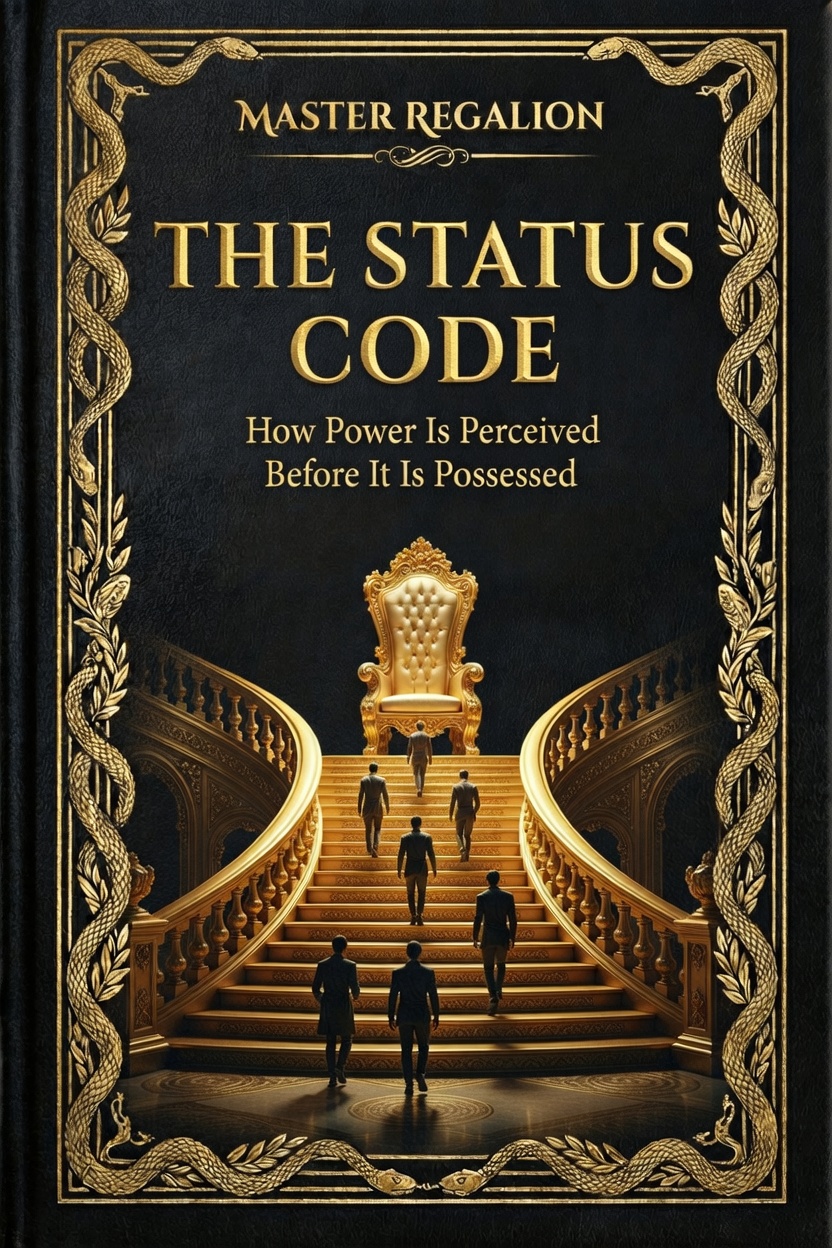
Description
Status is not the reward for achievement. It is the precondition for it.
Walk into any room and something happens before a word is spoken. People make assessments. Not consciously, not deliberately, but automatically and almost instantly. Who is important here. Who should be listened to. Who carries authority that was never formally assigned but is somehow present anyway.
That something is status. And it is the most underestimated force in every competitive environment you will ever operate in.
The people who possess it at high levels did not accumulate it gradually by being impressive for long enough. They understood its mechanics. They understood that status is built through specific signals, protected through specific disciplines, and destroyed through specific mistakes. They operated accordingly.
The Status Code is the mechanics.
The Problem With How Most People Think About Status
Most ambitious people focus almost entirely on what researchers call achieved status: the credentials, the track record, the demonstrated results. They work hard, build capability, accumulate accomplishments, and expect the social recognition to follow automatically.
Sometimes it does. More often, it follows on a significant delay, arrives incompletely, or never fully materializes despite the genuine achievement behind it.
The reason is that ascribed status, the status that is granted through perception rather than earned through demonstration, does not automatically track achieved status. It tracks the signals that people associate with high status, which is a different and only partially overlapping set of things.
The person who understands both is operating with the complete picture. The person who only understands the first is doing real work for partial credit.
What The Status Code Contains
Chapter 1: What Status Actually Is
The distinction between achieved status and ascribed status, and why confusing them is one of the most expensive mistakes a person building their position can make. How the brain processes social hierarchy automatically and below the threshold of conscious awareness. Why the signals of status shape outcomes independent of the capability behind them. Demonstrated through the contrast between Augustus Caesar and Nero: same throne, same resources, completely different outcomes driven by how each managed the signals of their authority.
Chapter 2: The Signals That Build Status
The specific behavioral signals that communicate status before a word is spoken. Composure under pressure: why the delay between stimulus and response is where status is built or lost, and how J.P. Morgan built the most authoritative position in American finance in part through the practiced discipline of composed certainty. The management of attention as a resource. The quality of certainty in speech and movement that distinguishes the person who is reporting a reality from the person who is advocating for one.
Chapter 3: The Perception Precedes the Reality
How status becomes self-reinforcing once established at a sufficient level, and how this cycle can be entered deliberately. The entry point is the management of your initial presentation in any new context, because first impressions are disproportionately influential not because people are shallow but because of a specific feature of how the brain updates its model of a person. Demonstrated through Augustus Caesar’s construction of perceived authority across the nearly two decades before his power was formally consolidated, beginning at age 19 with no military record and no established position.
Chapter 4: What Destroys Status and How to Protect It
The specific behaviors that erode in a moment what patience builds across months. Seeking approval and why its visibility is the most reliably status-destroying pattern available. Explaining yourself when not asked, and what the unprompted explanation actually communicates about how you see your own position. Reacting with disproportionate energy to low-level provocations. Over-availability and the signal it sends about the competing demand for your time. Each one examined with enough precision that the discipline required to avoid it is specific rather than abstract.
Why This Book Exists in the Tenets of Power Library
The Tenets of Power library is built around a single premise: that power is a learnable discipline with a coherent underlying structure, and that understanding that structure changes the quality of every significant decision you make.
The Status Code is the entry point to that structure. It addresses the single factor that precedes everything else in the library: how you are perceived before you have said anything, done anything, or demonstrated anything. Because the person who is perceived as high status gets opportunities, benefit of the doubt, and serious consideration that the person with equal capability but lower perceived status does not.
Perception precedes reality in almost every significant human interaction. Status is the architecture of that perception. This book is where the doctrine begins.
Who This Is For
This book is for the person who has sensed that the social and professional dynamics around them are governed by something beyond capability and effort but has not yet had a precise framework for what that something is.
It is for the person who has watched less capable people rise faster and felt the gap between their results and their recognition, and who suspects the explanation is architectural rather than circumstantial.
It is for the person who is entering a new environment, a new organization, a new market, a new competitive context, and wants to establish their position from the first interaction rather than spending months recovering from a weak initial presentation.
And it is for the person who wants to understand the complete Tenets of Power doctrine and wants to begin at the beginning, with the foundational element that everything else builds from.
Objections Addressed
“Is this just advice about confidence and body language?”
No. The Status Code is grounded in the documented psychology of how status assessment actually operates in human social environments, demonstrated through historical figures whose careers provide evidence rather than anecdote. The signals it examines are specific, the mechanisms are precise, and the historical demonstrations show the principles operating at the highest recorded stakes. This is doctrine, not lifestyle advice.
“At this price, how substantial is the content?”
The Status Code is short by design. The choice was between a longer book that diluted the core argument with filler and a concentrated book that delivered the complete framework without padding. Every page earns its place. The price reflects the entry-level positioning in the Tenets of Power library, not the depth of the content relative to that positioning.
“How does this relate to the other Tenets of Power books?”
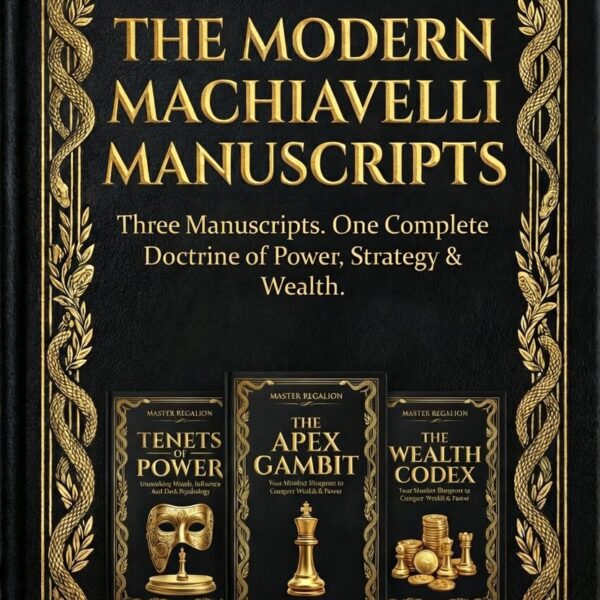
The Status Code is the entry point. Tenets of Power is the full philosophical and psychological doctrine, including the complete Dark Triad framework. The Apex Gambit is the tactical field manual with 64 historically demonstrated strategies. The Wealth Codex is the financial architecture drawn from Rockefeller, Carnegie, and the Rothschilds. The Status Code introduces the core concern of the entire library: how power is actually perceived and built, before the specific domains of strategy, psychology, and wealth are addressed in depth.
Status is not assigned. It is not inherited. It is built.
Through specific signals. Maintained through specific disciplines. Lost through specific mistakes. The people who possess it at the level that actually changes how they move through the world are not fundamentally different from the people who do not. They understood the mechanics earlier and applied them more consistently.
The Status Code is the mechanics.
4 chapters. Historically grounded. The entry point to the complete doctrine of power.
$19. Delivered immediately as a downloadable PDF.

Reviews
There are no reviews yet.