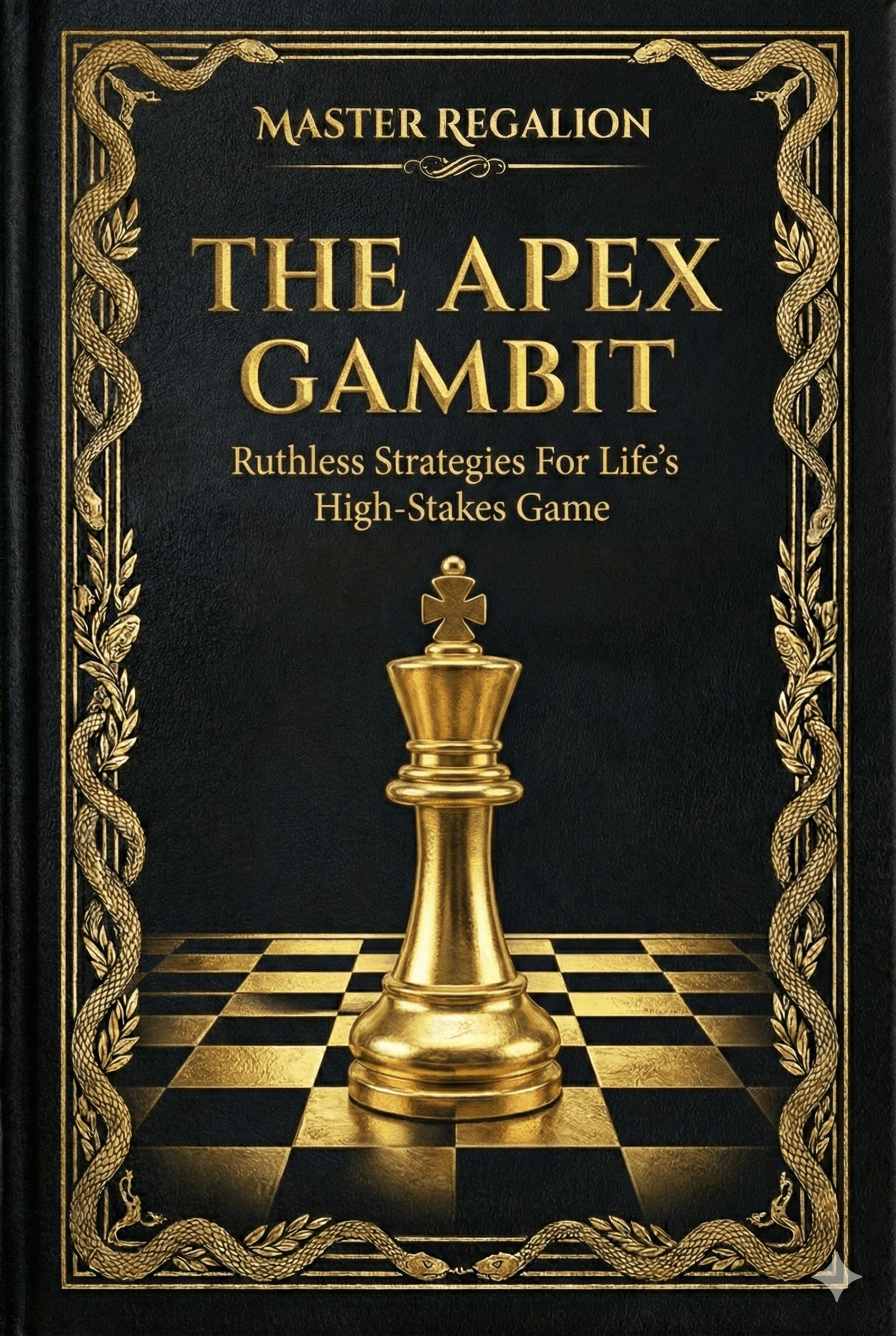
Description
Most people lose before the first move is made.
Not because they lack talent. Not because they lack effort. Because they are operating inside a game whose actual rules were never shown to them.
While they work harder, network more, read the standard books, and follow the conventional path, the people rising around them are playing by a different set of principles entirely. Principles that are not taught in schools, not discussed in polite company, and not found in the books designed to make you feel better about where you currently are.
The Apex Gambit is the other set of principles.
What This Is
64 strategies. Drawn from the full sweep of recorded human history.
Not from business case studies. Not from interviews with modern entrepreneurs. From the actual historical record of how influence, power, and dominance have been built and deployed across centuries, by people whose decisions had permanent consequences and whose methods were documented precisely because the scale of what they accomplished made forgetting impossible.
Julius Caesar crossing the Rubicon with one legion and controlling Rome within days. Fabius Maximus refusing battle while Hannibal burned Italy, outlasting the greatest general of the ancient world through patience alone. The Allied intelligence operation that convinced Hitler that Normandy was a feint, keeping his Panzer reserves idle while the real invasion succeeded. Cardinal Richelieu’s network of informants placed in every noble household in France, hearing the conversations in rooms he was never supposed to be in.
These are not illustrations. They are proof. Proof that the principles in this book work, tested under conditions where failure was not an inconvenience but a permanent end.
The Six Parts
Part I: The Strategic Mindset. Eight tactics that build the internal architecture every other play depends on. The Detached Observer. The Sovereign Frame. The Acceptance of Ruin. The Long View. The Calculated Risk. The Reality Distortion Field. The Strategic Patience. The Controlled Impulse. Before you can operate with precision in the external world, this architecture has to exist internally. This section builds it.
Part II: Intelligence and Information. Eight tactics covering the currency of control. The Information Vacuum. The Art of Eavesdropping. The Unseen Network. The Pattern Seeker. The Hidden Agenda Detector. The Truth Extractor. The Information Overload. The Controlled Leak. In every contest that has ever been decided, the winner knew more. This section is about building the architecture to gather, process, and deploy that intelligence.
Part III: Perception and Deception. Thirteen tactics governing the art of constructing, maintaining, and weaponizing perception. The Art of Misdirection. The Calculated Bluff. The False Flag. The Smoke Screen. The Trojan Horse. The Innocent Facade. The Unpredictable Move. The Strategic Ambiguity. The Illusion of Control. The Mirror Effect. The Bait and Switch. The Strategic Retreat. The Predator’s Stillness. Reality is what people believe it is. Belief is shapeable. This section is about shaping it.
Part IV: Influence and Compliance. Thirteen tactics covering how will and behavior are bent without force. The Reciprocity Trap. The Scarcity Principle. The Authority Projection. The Social Proof Lever. The Commitment Bind. The Liking Advantage. The Guilt Imposition. The Debt of Favor. The Illusion of Choice. The Foot in the Door. The Door in the Face. The Scapegoat Transfer. The Emotional Contagion.
Part V: Offensive and Proactive. Twelve tactics for seizing initiative and dictating terms. The First Strike Advantage. The Momentum Build. The Strategic Encirclement. The Divide and Conquer. The Weak Link Exploitation. The Decisive Blow. The Calculated Provocation. The Narrative Control. The Preemptive Strike. The Unilateral Action. The Psychological Warfare. The Second Board.
Part VI: Defensive and Counter-Tactics. Ten tactics for protecting your position, neutralizing attacks, and building exits before you need them. The Unbreakable Boundary. The Counter-Narrative. The Strategic Withdrawal. The Disarming Question. The Mirror Defense. The Indifference Shield. The Reputation Fortification. The Loyalty Test. The Controlled Exposure. The Exit Architecture.
What Makes This Different
Every tactic is historically demonstrated. Not illustrated. Demonstrated.
There is a difference between a book that uses a historical name to decorate a point and a book that examines a historical situation with enough depth to show you exactly how the principle operated, what it cost the opponent, and what it would have cost if executed incorrectly.
The Apex Gambit is the second kind of book.
When this book teaches The Strategic Patience, it does not drop Fabius Maximus’s name and move on. It puts you in Italy in 217 BC, shows you the Roman Senate overruling him, shows you 70,000 Romans dying at Cannae because they chose aggression over patience, and shows you Fabius outliving every man who called him a coward. The principle does not just make sense after reading it. It is impossible to forget.
This is how the book was built. Sixty-four times. Every one earned.
The Counter Element
On the tactics that can be most effectively turned against you, the book includes a counter.
Not every tactic requires one. But for the tactics that operate with equal force in either direction, the ones that skilled operators use against people who do not recognize them, the book includes a specific section on what the play feels like from inside it and the one move that neutralizes it.
This doubles the practical value of the most dangerous entries. You are not only learning to deploy these tactics. You are learning to recognize when they are being deployed against you.
Who This Is For
This book is for the person who has sensed that the world operates by rules they have not been shown and is ready to see them clearly.
It is for the negotiator who keeps losing ground they should not be losing. The operator who keeps being outmaneuvered by people with less capability. The builder who keeps watching their work benefit others more than themselves. The person who is playing the game honestly and wondering why honest play keeps producing outcomes that feel like losses.
If you want a book that makes you feel better about where you are, this is the wrong book. If you want a book that changes how you see where you are and gives you the tools to change it, this is the right one.
Common Questions
“I have read the 48 Laws of Power and books like it. Is this just more of the same?”
No. The 48 Laws is an excellent book and this one does not attempt to replace it. What The Apex Gambit does that most books in this space do not is demonstrate each principle through a historically specific, analytically deep examination rather than a brief reference. It also includes the counter element on the dangerous tactics, which changes the nature of what you are reading from a list of offensive tools to a complete strategic education. If you have read widely in this space, you will find things here that you have not encountered before and depth on things you have encountered only at the surface.
“Is a digital product worth this price?”
The price of a book has never been a function of its physical weight. It is a function of what changes when you understand what it contains. One negotiation conducted with the precision this book teaches will pay for it many times over. One manipulation recognized and neutralized before it costs you will do the same. Evaluate it on that basis.
“I do not know enough about this author to trust the content.”
The content is grounded in the historical record, not in the author’s personal authority. Every major principle is demonstrated through events that happened, involving figures whose careers are documented, with consequences that were permanent. You do not need to trust the author. You need to evaluate whether the historical evidence presented is accurately represented and whether the principles it demonstrates are genuinely applicable. Read the first chapter. The evidence speaks for itself.
The game is already in progress.
It was in progress before you picked up this book. It will continue after you put it down. The only question is whether you are playing it consciously or being played by it without knowing the rules.
The Apex Gambit gives you the rules.
64 tactics. Historically demonstrated. Every dangerous one countered. The complete field manual for the game that is already being played around you.
Reviews
There are no reviews yet.